
Build the panel you can’t buy
Survey Panels for researchers in LMICs
In many high-income countries, you can often buy a ready-made research panel in minutes. But when you’re conducting research in low- and middle-income countries (LMICs) like Uganda, Bangladesh, or Venezuela, there’s rarely a suitable panel of respondents available — especially not one segmented by specific demographic criteria. So you need to build your own.
engageSPARK gives universities, NGOs and research teams the tools to recruit, reward, and keep a targeted panel, entirely by phone. No app required.
- Recruit by Random Digit Dialing (RDD)
- Reach anyone — even people who can’t read
- Keep people with instant airtime
- Voice, SMS, WhatsApp & CATI in one place
15-min call • no pitch • we’ll review your use case
What is a survey panel?
A survey panel is simply the people you’ll survey — a group you’ve recruited and profiled, with their consent, so you can reach them when you need to. Sometimes that’s a single survey; often it’s the same people over time.
Why build your own panel?
There’s rarely a reliable one to buy: sampling lists are outdated, and the off-the-shelf panels that do exist are often stacked with the same professional respondents answering everything. Build your own and you get a real, random sample — of people no directory could hand you.
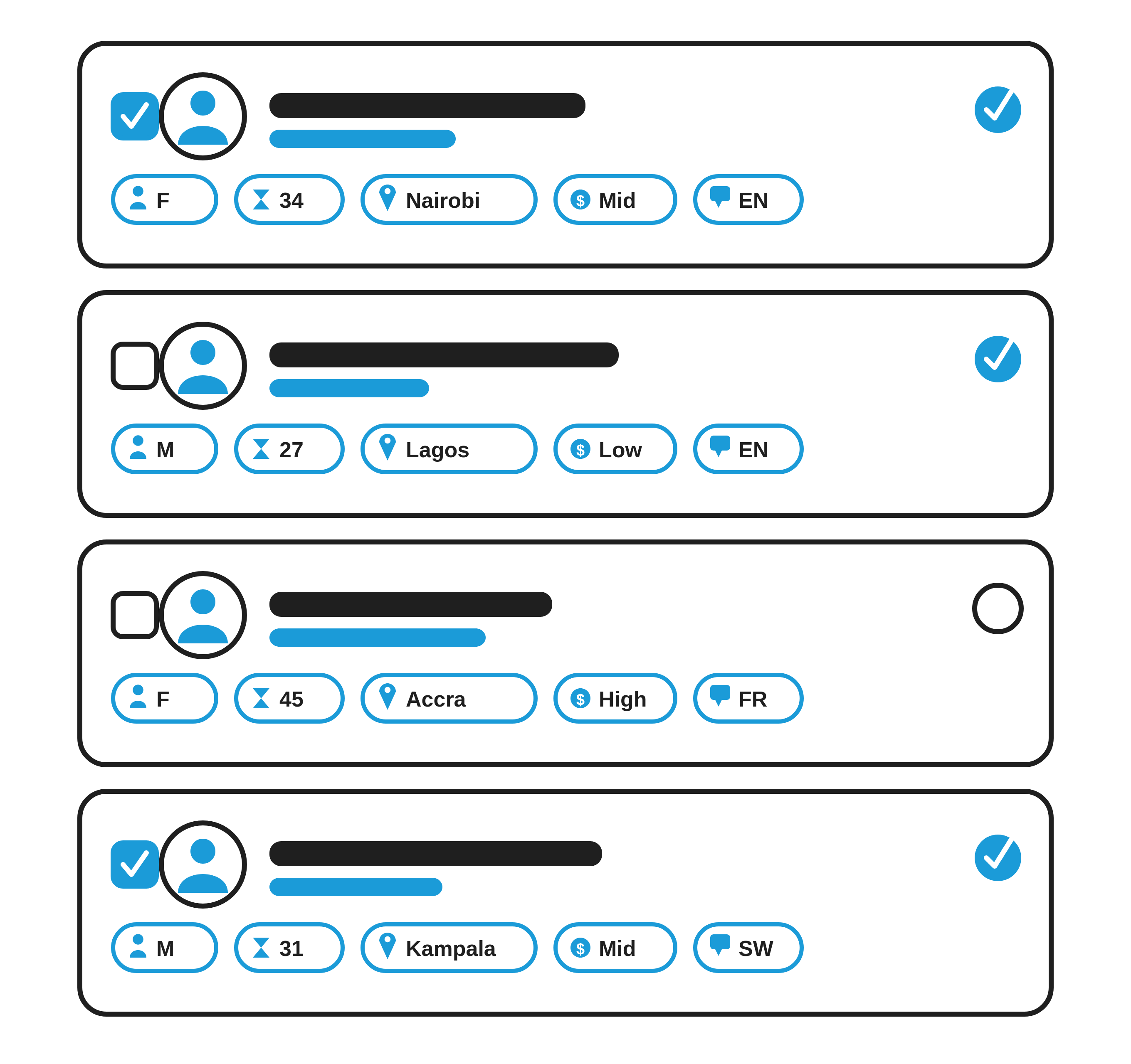
Reach people no list can give you
Even for a single survey, you need a representative sample of — say — smallholder farmers or displaced families, and no directory exists to pull them from. RDD finds them.
Measure if your program worked
Run a baseline, then return to the same people for midline and endline to see if incomes, health, or behavior actually changed.
Track a fast-moving situation
Check in every few weeks on prices, income, or displacement during a drought, election, or economic shock — without going back to the field each time.
Monitor health & behavior over time
Follow vaccine uptake, symptoms, or health practices in a population between expensive in-person survey rounds.
Buy vs. Build
🛒 A bought opt-in panel
- The same “professional respondents” over and over
- You can’t see how people were recruited
- Skews urban, connected, and used to surveys
- You don’t own the relationship or the consent
📱 A panel you build with RDD
- A real random sample of the whole network
- You control recruitment, consent & profiling
- Reaches rural, remote & hard-to-reach people
- It’s yours — to segment, reward, and re-survey
How it works
Everything you need to run a panel across its whole life. On a single no-code platform.
01 · RECRUIT
Find & Enroll People: Generate random numbers across every network, then call them with an automated voice survey (IVR) to screen, profile, and enroll.
02 · RETAIN
Keep them answering: Reward completion with instant airtime, personalize each contact, schedule predictably, and trace people who move.
03 · REFRESH
Top it up over time: Panels shrink as people drop out. Add fresh random respondents to stay representative — on your panel or an existing one.
Step 01 · Recruit
Recruit by random digit dialing
Start from the network, not a list. engageSPARK generates random phone numbers across every mobile operator, so every number has an equal chance of being selected — reaching people the usual panels never touch.
How you make first contact decides who actually joins. Recruit by text and you silently lose everyone who can’t read — often the rural, older and poorest people you most want in your sample — and cold survey texts to strangers mostly go ignored anyway. So recruitment runs on automated voice calls (IVR): the phone rings, a recorded voice asks your screening questions in the local language, and people answer by pressing a key or speaking. That way the hard-to-reach people RDD reaches actually make it into your panel — instead of being filtered out before they ever join.
RDD reaches them. Automated voice enrolls them.
- Every network, every region: reach rural areas, informal settlements and hard-to-reach places
- Automated voice (IVR) enrollment: in local languages and nothing for participants to read, so low-literacy respondents aren’t left out
- Screen & profile on first contact: age, gender, location, and language — to build a panel you can segment
- Consent, logged: every enrollment starts with a clear opt-in you can prove later
Or let people recruit themselves
Running an ad, event, or partner campaign? People can opt in on their own — and each route drops them straight into the automated screening survey on the same channel they came in on:
- Text a keyword or call a toll-free number → screened right there by SMS or voice (IVR)
- Scan a QR code or tap an online ad → screened on WhatsApp, for smartphone users
Because people opt in themselves, these sign-ups are self-selected — best used alongside RDD, or to top up a specific hard-to-reach group.
What it costs
How much does a panel member cost?
We think about cost as the price to recruit one panel member — which depends on the country, how many screening questions you ask, and how hard your target group is to find.
That means there is no simple sticker price, but what we can give you are real ranges we’ve seen on past projects. Note that these are illustrative examples from real projects — these are not a quote or a price guarantee. Ask us for an estimate for your own study.
Cost per recruited member, by number of screening questions
| Screening questions | Uganda | Colombia | Bangladesh |
|---|---|---|---|
| 1 question | $0.51 | $1.92 | $0.84 |
| 2 questions | $0.67 | $4.57 | $1.87 |
| 3 questions | $1.01 | $6.62 | $1.95 |
| 4 questions | $1.03 | $6.83 | $2.28 |
| 5 questions | $1.15 | $6.92 | $2.43 |
| 6 questions | $1.38 | $7.17 | $2.50 |
| 7 questions | $1.40 | — | — |
The rarer your target group, the more it costs to find them
When you need a specific, harder-to-reach group, you screen past more people to find each one who qualifies — so the cost per recruited member climbs. Here’s what that has looked like when the panel has to be above a certain age:
| If you need respondents… | Uganda | Colombia | Bangladesh |
|---|---|---|---|
| over 25 | $1.60 | $9.48 | $3.49 |
| over 35 | $4.52 | $16.57 | $9.46 |
| over 40 | $6.62 | $23.13 | $15.79 |
| over 45 | $11.14 | $33.12 | $25.51 |
Step 02 · Retain
Keep your panel alive for years
The first survey is easy. It’s the fifth, tenth, and twentieth that decide whether you have a panel at all. People drop out over time — often a third or more between rounds — and if the hardest-to-reach leave first, your data quietly gets less representative. Here’s how you hold on to them:
- Instant airtime the moment they finish: in studies, a small airtime reward lifted response by about a third; it also increases the likelihood that they’ll stick around for the next survey and the next reward
- Personalize every contact: “Hi Amina, how’s the harvest?” beats a generic robocall
- Predictable scheduling: same day, same time, so people can expect the call
- Channel-hop for follow-ups now that you know who reads and who has a smartphone, reach each person the way that fits: WhatsApp, SMS, or voice
- Trace people who move: collect a backup contact at enrollment and reconnect when a number goes dead
Step 03 · Refresh
Refresh any panel — yours, or one you already have

Even a well-run panel shrinks and drifts over time, and new people age into the population. The fix is a refresh: draw a fresh random sample to top the panel back up, restore your under-filled groups, and keep it representative round after round.
- Top up with fresh RDD respondents to replace natural drop-off
- Rebalance under-represented groups: pull more from the regions or demographics that are thin
- Works on an existing list too: import it, scrub it, re-confirm consent, and top it up
Control the mix
Watch your quotas in real time
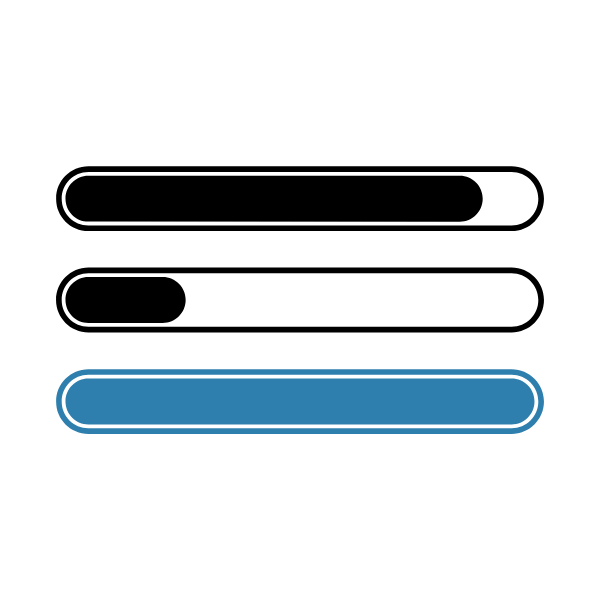
Because you own the panel, you can see your demographic splits as responses come in — and act on them. Set targets per group and let the campaign stop each group automatically once it’s full, so you hit a balanced sample instead of over-surveying whoever’s easiest to reach.
- Segment by age, gender, region, language…
- Auto-stop a group when its quota is met
- Spot thin groups & trigger a targeted top-up
- Export to Excel, or send results to your own tools
Ethics & data protection
Built for research standards

For universities, NGOs and evaluators, clean consent and careful data handling matter as much as response rates. The platform is built for that.
- Consent at enrollment: read aloud or in text, with the opt-in recorded
- GDPR & CCPA compliant: with encryption and per-team-member permissions
- Clean data at the source: skip logic and validation catch bad answers as they come in
Fast support, by humans
We pride ourselves on the support we offer. Our customers love that, and tell us as much.
- Talk to our team easily—don’t be stuck with support bots.
- We aim to solve your issues—not just “resolve the ticket.”
- We’re friendly!
Try it—the chat is in the bottom right.
What our customers are saying
“We love using the engageSPARK platform – it’s super user-friendly, the customer service is great, and we’re learning how to get high response rates!”
Kasia Stochniol, Director
60 Decibels, a leading impact measurement company spun out of Acumen, has completed hundreds of impact measurement projects in 80+ countries using engageSPARK.





How may we help you?
Let’s talk!
Open the chat and say hi. We’re happy to help.
Or drop us an email at sales@engagespark.com